
Introducing the Real Time Instruments'
Ecosystem of Sensors
Real Time Instruments has developed a comphrensive suite of sensor solutions for every stage of the mining process. This ‘ecosystem of sensors’ works together to create a detailed and trackable view of your material from pit to port, enhancing efficiency, safety and operational certainty.

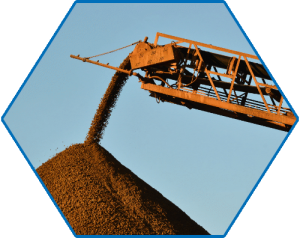
Process Control in Mining
In many mining and mineral processing plants, operational decisions are still driven by lab-based sampling methods that take hours—or even days—to return results. This delay creates a reactive environment where process adjustments lag behind material variability, causing unstable output quality, inefficiencies in energy and reagent use, and reduced equipment life. Modern process optimisation demands continuous, real-time data.
The Challenges Miners Are Facing Globally
Poor process stability increases energy consumption by up to 15% due to unoptimised grinding and flotation circuits.
Uncontrolled process variability can result in 5–10% loss in recovery of valuable minerals.
Manual sampling delays lead to data lags of 4–12 hours, slowing down critical processing adjustments.
The Benefits of Effective Process Control
Up to 5% Increase in Recovery Through Real-Time Control
Implementing real-time elemental and moisture analysis allows operators to react immediately to changes in material properties, leading to improved process stability and higher recovery.
30% Reduction in Processing Variability
Automated feedback loops reduce swings in plant parameters such as feed grade, moisture, and ash content, improving flotation, separation, and combustion efficiency across the circuit.
Over 100 Hours per Month Gained in Operator Efficiency
Real-time data eliminates guesswork and enables teams to shift focus from reactive troubleshooting to proactive performance optimisation, enhancing productivity at every level.
Up to
Total estimated savings per year
A Dedicated Service Team
Our solutions come with a dedicated Product Support Agreement (PSA) to ensure your service is operational.

Real Time Instruments is Solving These Challenges
How a leading iron ore producer tapped into real-time analysis to drive efficient decision making and boost operational reliability
Challenge Addressed: In iron ore operations, consistent product quality and stable throughput are essential for meeting export specifications and maintaining profitability. However, at one Australian open-pit mine, reliance on delayed laboratory analysis meant that operators had limited visibility over feed material in real time. This lack of timely data made it difficult to control key process variables, leading to inefficiencies, variability, and an increased risk of off-spec product.
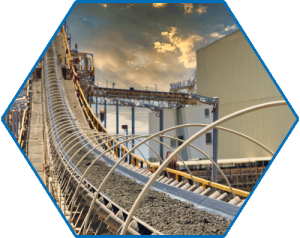
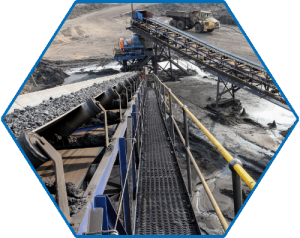
RTI’s Solution: To address these challenges, RTI implemented its AllScan Cf-252 elemental analyser on the site’s conveyor system. This real-time PGNAA-based solution continuously measured the elemental composition of the ore—particularly iron content—as it moved through the process. The system provided operators with live data, enabling them to make on-the-spot decisions about crusher settings, feed blending, and process adjustments. With AllScan integrated into the control loop, the operation moved from a reactive quality model to a proactive, data-driven process control strategy.
Implementation: RTI worked closely with site engineers to identify the optimal installation point for the analyser to ensure accurate and reliable readings. The AllScan unit was calibrated to the site’s specific ore characteristics, and operators were trained to interpret and act on the live data provided. Once operational, the system quickly revealed fluctuations in feed quality that had gone unnoticed under the old lab-based system. Operators were able to respond immediately to these changes, fine-tuning their process and improving consistency throughout the operation.
Results Achieved: The introduction of real-time process control brought measurable improvements to the site’s performance. With full visibility into conveyed material composition, operators could act decisively to manage variability and maintain product specifications. Process stability improved significantly, resulting in reduced energy use, less rework, and more consistent throughput. The ability to monitor and adjust processing conditions in real time translated into more efficient operations and better quality assurance across the board.
Future Applications: The success of RTI’s AllScan technology in this iron ore application highlights its potential for wider adoption. Beyond process control, the same real-time data capabilities can be used to enhance ore sorting and other downstream processes where compositional accuracy is critical. The case demonstrates how real-time analysis can be a game-changer for mines looking to improve operational responsiveness, reduce waste, and maximise resource value.
